The North Texas Winter-to-Spring Weed Transition Has Begun
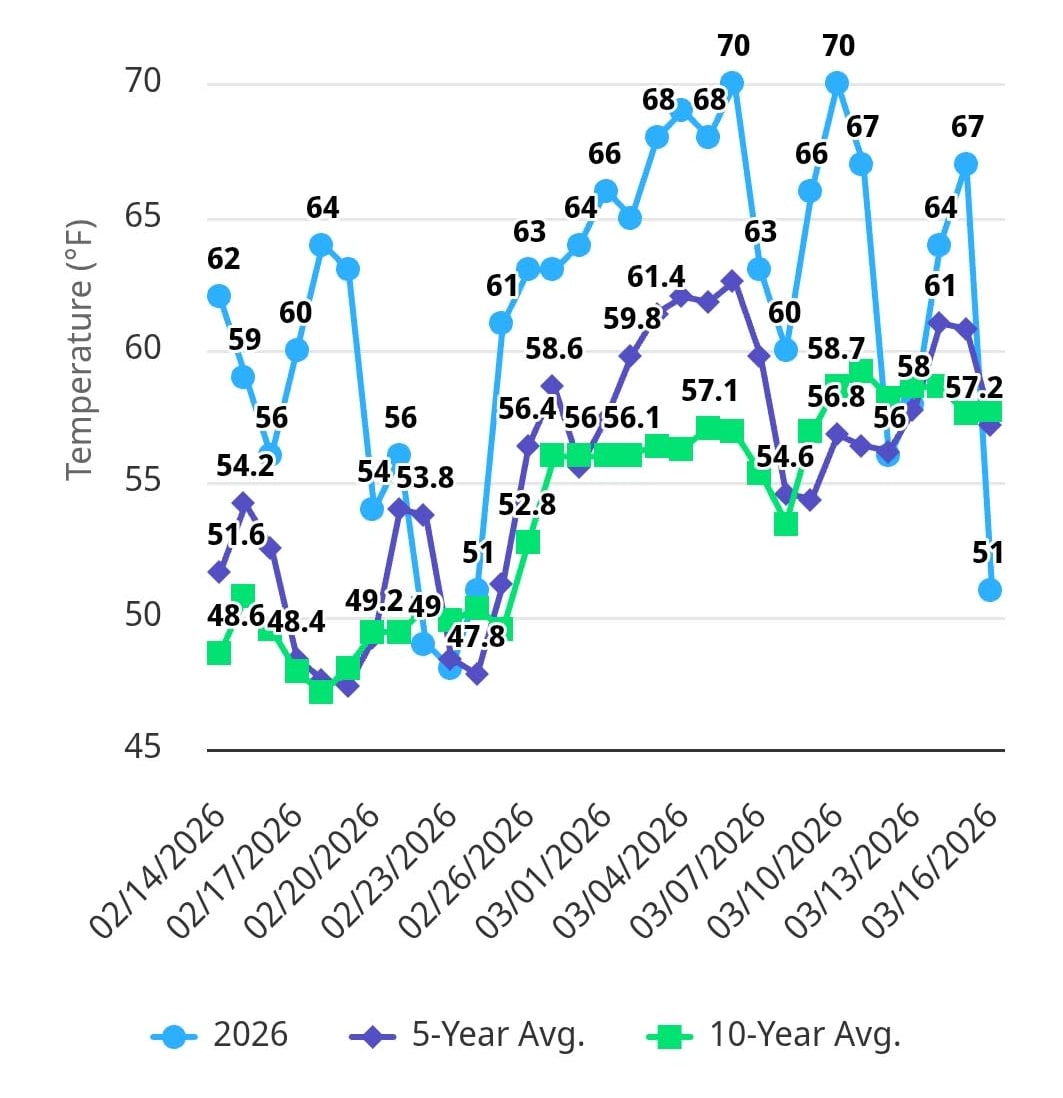
As of March 16th, soil temperature data across Collin County and North Texas shows something important: soil temperatures have been consistently above historical averages for this time of year. In fact, many days recently have crossed the 55°F threshold — the point at which many spring weeds begin to germinate. That means we are now firmly in what turf managers call the winter-to-spring weed transition period. And this is when lawns often begin showing a mix of different weed types all at once. During this crossover window, North Texas lawns commonly contain multiple generations of weeds growing simultaneously. You may still see winter weeds like: • Chickweed At the same time, early spring weeds begin to emerge such as: • Spurge Because soil temperatures have been warmer than normal this season, these germination cycles are happening earlier and more aggressively than typical years. That creates a unique management challenge. Your lawn may be dealing with multiple weed classes at the same time. In turf management, weeds generally fall into three primary categories: Broadleaf weeds Grassy weeds Sedges Each category behaves differently. More importantly, each category requires different herbicides for proper control. There is no single product that controls every weed type across all grass varieties. Many lawn companies operate on a fixed program. Products are often mixed in large tanks early in the morning and applied across every property scheduled for that day. That approach may be efficient operationally, but it assumes every lawn is facing the same weed pressures at the same time. In reality, every property in North Texas behaves differently. Sun exposure, irrigation habits, soil density, turf type, traffic patterns, and temperature exposure can all influence which weeds are present in a particular lawn. Treating all lawns with the same solution rarely produces the best results. At American Lawnscape, we approach weed control differently. Instead of arriving with a pre-mixed tank solution, our trucks carry clean water. When we arrive at your property, we evaluate what your lawn is dealing with at that moment. Then we mix the appropriate herbicides on site, selecting the right combination of products to target the specific weed pressures present in your lawn. That allows us to treat: • Broadleaf weeds with the correct chemistry for the situation. The goal isn’t just to spray something. The goal is to apply the right solution at the right time. The soil temperature chart above shows exactly why this approach matters. When temperatures run warmer than average — as they have this season — weed germination cycles shift earlier and become more dynamic. A lawn care program that relies only on calendar dates can easily fall behind. At American Lawnscape, we monitor actual environmental conditions and adjust our treatment decisions accordingly. Because weeds don’t follow a calendar. They follow temperature and moisture. The winter-to-spring transition period is one of the most active times for weed development in North Texas lawns. By recognizing what’s happening below the surface — particularly soil temperature trends — we can make smarter treatment decisions that protect turf before weed pressure becomes overwhelming. Healthy turf management isn’t about reacting after weeds appear. It’s about understanding the conditions that allow them to grow in the first place. And adjusting your strategy accordingly. We'd love to help you manage Spring . . . and your lawn . . . to their fullest potential! Reach out to us TODAY to find out more about a program that is the right fit for YOU! Call/Text 214-308-1322 or visit our website @ www.americanlawnscape.com.
The North Texas Winter-to-Spring Weed Transition Has Begun
What the Winter-to-Spring Transition Actually Looks Like
• Henbit
• Rescuegrass
• Annual bluegrass (Poa annua)
• Knotweed
• Early crabgrass
• Foxtail
• GoosegrassNot All Weeds Are the Same
Examples: chickweed, henbit, clover
Examples: crabgrass, goosegrass, foxtail
Examples: yellow nutsedge, purple nutsedge and killinga.Why One-Size-Fits-All Lawn Programs Fail
The American Lawnscape Approach
• Grassy weeds
• SedgesData-Driven Lawn Care
Spring Is Just Getting Started
Images